
Access to nutritious, affordable food is essential for community well-being. Hartford faces significant barriers, with only one full-service grocery store serving the entire city. This lack of access disproportionately affects people of color and low-income families.
The Healthy Hartford Hub addresses this challenge head-on by:
- developing a full-service supermarket to serve the North Hartford Promise Zone
- reducing food deserts and bringing fresh produce closer to residents
- partnering with community initiatives like the Hartford Advisory Commission on Food Policy
By investing in a sustainable grocery model and advocating for policy changes, we are making healthy food accessible
Advancing Nutrition Equity Through Resident Leadership
The Community Action Task Force (CATF) is advancing nutrition equity in North Hartford by strengthening resident engagement and leadership and pursuing policy, systems, and environmental change strategies that can improve access to healthy, affordable food.
Recent progress includes:
- Strengthening resident leadership and advocacy: CATF and its partners continue to elevate resident voices in decisions affecting food access, neighborhood development, transportation, and the built environment. Residents and community partners are helping shape priorities, advocate for accountability, and influence decisions that will impact the health of North Hartford for years to come.
- Advancing the Arrowhead Gateway strategy: CATF continues to advocate for Arrowhead Gateway as the priority location for a full-service grocery store, building on years of community engagement, market research, partner due diligence, and efforts to identify a viable grocery operator. The coalition is working to ensure that public investment is aligned with a sustainable solution that meets the community’s need for convenient access to nutritious food.
- Advancing policy and systems change: CATF is working with city officials, consultants, health institutions, community organizations, and other stakeholders to strengthen accountability around public investments and establish clear benchmarks and timelines for moving grocery development from planning toward implementation.
- Using data to inform community priorities: CATF and its partners are incorporating data on food insecurity, shopping behavior, transportation access, vehicle ownership, transit times, and the neighborhood food environment to inform advocacy and recommendations. This evidence helps demonstrate how transportation and the built environment influence residents’ ability to access healthy food.
- Learning from existing food-access models: CATF is examining lessons from Hartford’s existing grocery initiatives, including mission-driven retail models, to better understand what supports long-term sustainability and how future investments can avoid repeating past challenges.
- Pursuing environmental improvements: CATF is also advocating for improvements to the physical conditions surrounding the Arrowhead Gateway area, including sidewalks, parking, streetscape design, and transit access. These improvements can make healthy food destinations more accessible and strengthen the broader neighborhood environment.
Together, these efforts reflect CATF’s commitment to creating policy, systems, and environmental change that supports healthier communities. Not simply increasing access to a grocery store, but addressing the conditions that influence how residents live, move, shop, and access nutritious food.
North End Food Swamp Exposure by Race and Ethnicity
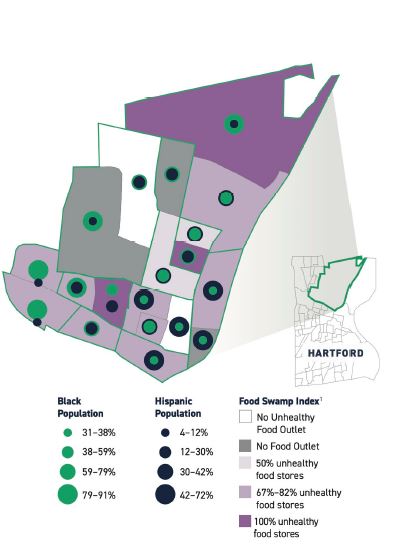
Report by Urban Alliance for the Hartford Invest Health Team.